Living in Guanacaste Costa Rica Full Time: What Fits?
May 7, 2026
May 7, 2026
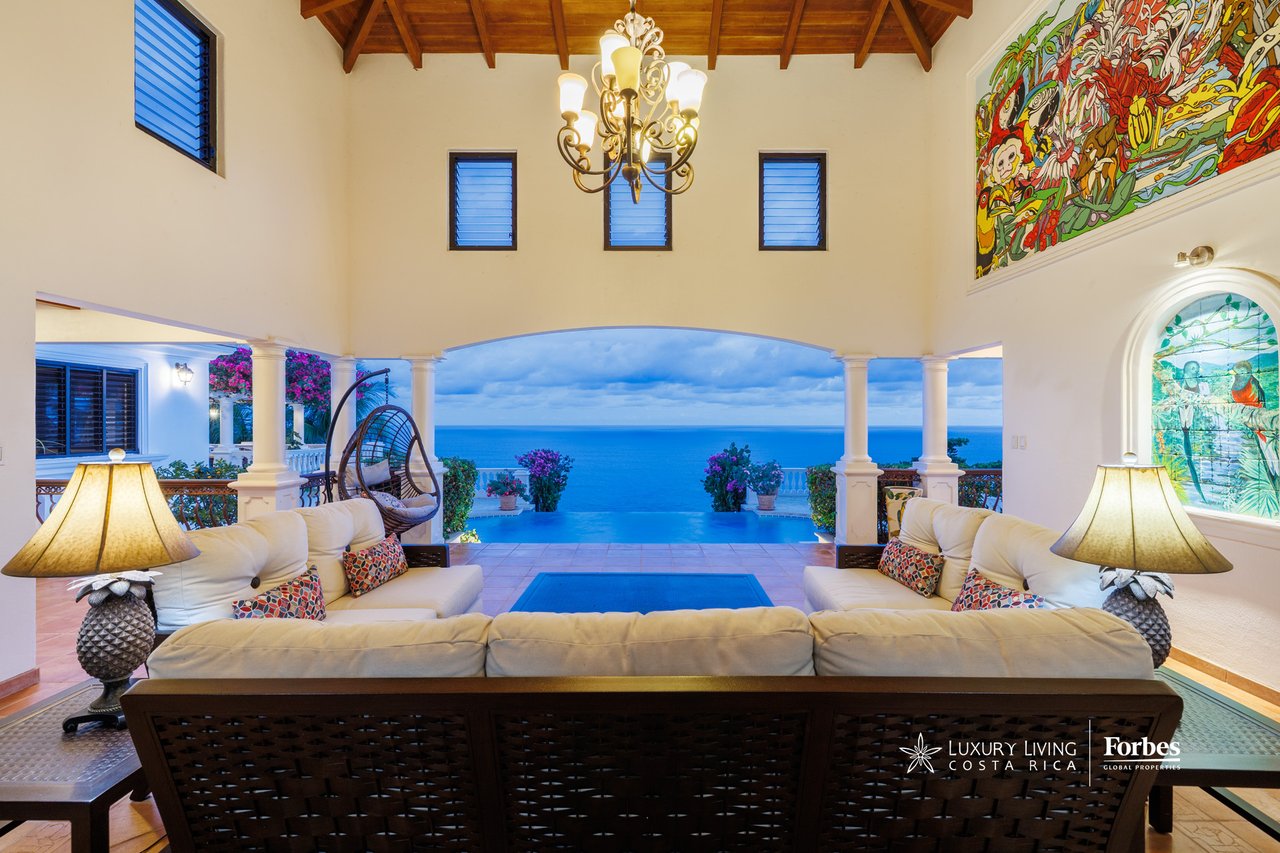
Photo credit: The view from Villa Romantica in Carrillo, Guanacaste
Thinking about living in Guanacaste full time? It is an exciting idea, but it helps to look beyond the beach photos. If you are planning a permanent move, your daily life will depend on practical details like healthcare, school access, airport convenience, and internet reliability just as much as views and amenities. This guide will help you understand how Guanacaste functions as a full-time home base so you can make a more confident, well-matched decision. Let’s dive in.
One of the most important things to understand is that Guanacaste does not function like one large, centralized city. In practice, it operates more like a network of residential and service corridors anchored by key towns and communities.
Liberia is the provincial capital and administrative center, located about 203 kilometers from San José. The municipal government describes the area as warm year round, with average temperatures between 26 and 28°C and clear dry and rainy seasons. That climate, combined with the province’s dry tropical forest landscape, shapes a daily routine that often feels more spread out and outdoor-oriented than life in a dense urban center.
For many full-time residents, that means your experience of Guanacaste depends less on the province as a whole and more on your exact location within it. The real question is not simply whether you want to live in Guanacaste, but which corridor supports the way you actually live each week.
If you are relocating full time, healthcare access should be one of your first filters. Guanacaste offers both public and private care, but the strongest concentration of medical infrastructure is in Liberia.
The public anchor is Hospital Enrique Baltodano Briceño in Liberia, which the CCSS lists as a regional hospital. Recent CCSS updates show continued investment in equipment and services, including a new laparoscopic tower and an oncology pharmacy consult, which suggests local specialty capacity is growing.
On the private side, Hospital San Rafael Arcángel in Liberia advertises 24-hour service, more than 70 specialists, emergency care, surgery, hospitalization, imaging, laboratory services, and maternity plans. That makes Liberia especially important for households that want regular access to a broader range of care options.
Some communities also offer supplemental medical access closer to home. Las Catalinas has an urgent care clinic that provides general and urgent care, house calls, ambulance services, and medical certificates. Hacienda Pinilla also lists a medical clinic on its amenities map.
The key takeaway is simple: healthcare in Guanacaste is not just about whether care exists. It is about how far your home is from the hospital, clinic, or urgent care setting that best fits your household’s needs.
For families making a full-time move, school planning often needs to come before choosing the home. In Guanacaste, the strongest concentration of international and bilingual school options sits along the Brasilito, Flamingo, Tamarindo, and Sardinal corridor.
That corridor includes several established options. CRIA in Brasilito describes itself as a bilingual, US-accredited school and an authorized College Board school and testing center. La Paz Community School operates as a bilingual IB World School with campuses in Brasilito/Cabo Velas and Palmira/Carrillo.
Journey School of Costa Rica in Tamarindo says it is accredited by IB, MEP, Dirección de Educación Privada, and MSA. Lakeside International School in Tablazo de Sardinal serves PK-12 as a bilingual international school, while Pacífico Internacional in Cañafistula offers a Waldorf-inspired model.
For many relocating families, this creates a clear planning sequence:
This is one of the biggest differences between vacation ownership and full-time living. A home that feels ideal for short stays may be far less practical once school drop-offs and weekday logistics become part of daily life.
For many international buyers, airport access remains a major part of full-time life in Guanacaste. Whether you travel often, host visiting family, or split time between countries, proximity to Liberia’s airport can shape convenience in a very real way.
Guanacaste Airport is about 12 kilometers west of Liberia. According to the airport’s published information, 2025 traffic reached 1,973,831 passengers, with 26 direct international routes and 12 airlines. The destination network includes major cities in the United States and Canada, along with Zurich.
That level of connectivity is one of Guanacaste’s strongest practical advantages for full-time residents. It allows many households to maintain international mobility without routing every trip through the Central Valley first.
Still, airport convenience is not uniform across the province. Travel time from your home to LIR can vary significantly depending on whether you live near Papagayo, in the Brasilito-Tamarindo area, or farther south toward Nicoya or Sámara. For full-time living, those drive times deserve careful attention.
If you work remotely, stream heavily, or rely on stable communication for business and family life, internet service needs to be confirmed at the property level. In Guanacaste, town-level assumptions are not enough.
Kölbi lists fiber availability in areas including Liberia Centro, Tamarindo, Playas del Coco, Flamingo, Santa Cruz, Nicoya, and Sámara. Claro notes that coverage can vary based on geography and buildings. Liberty markets national mobile service with 4G and 5G coverage, and satellite-based service is also an address-specific option in Costa Rica.
The practical lesson is straightforward: always verify internet options for the exact address before you commit. Two homes in the same town can offer very different connectivity conditions.
Not all Guanacaste communities support full-time life in the same way. Some are more self-contained, some are more service-led, and some work best for buyers who want a walkable or town-like environment.
Hacienda Pinilla offers one of the clearest self-contained residential models in the province. This 4,500-acre gated community includes three miles of coastline along with a Beach Club, golf, horseback riding, tennis and pickleball, mountain biking, surf access, a market, a medical clinic, a security office, and multiple residential enclaves.
For buyers considering a permanent move, that infrastructure can support a more complete weekly routine without requiring constant trips elsewhere. It tends to appeal to households who value space, privacy, recreation, and a more established residential framework.
Reserva Conchal presents a managed resort-residential model around Playa Conchal. The community describes itself as a sustainable resort community, and its published information notes that two treatment plants process 100% of hotel and residential wastewater.
Its residential offering includes established communities such as Bougainvillea, and its Beach Club is tied to resident membership. For full-time buyers, the appeal often lies in combining resort amenities with a clearly defined residential setting.
Peninsula Papagayo represents the most curated ultra-luxury full-time model in Guanacaste. Spanning 1,400 acres of coastal dry tropical forest, it blends ocean, fairway, and forest environments within a highly service-oriented setting.
The community also highlights a long-running sustainability and community program serving nineteen surrounding towns. For buyers seeking concierge-style living, managed residences, and a highly refined ownership experience, Papagayo stands apart.
Las Catalinas is often the strongest match for buyers who want daily life to feel more town-based. It is a walkable, car-free beach town with pedestrian streets, plazas, trails in tropical dry forest, two beaches, restaurants, shops, recreational facilities, and an urgent care clinic.
That setup gives it a different rhythm from many resort-style communities. If your priority is being able to walk to more of your daily needs and enjoy a neighborhood feel, Las Catalinas offers one of the most distinct full-time living models in Guanacaste.
The best full-time move is rarely about choosing the most famous beach or the most impressive amenity list. It is about matching your property to your real routine.
Start by thinking through the basics:
In Guanacaste, these decisions are deeply connected. A property can be beautiful and still be the wrong fit if it complicates your weekly life. The strongest relocation outcomes usually happen when buyers choose based on function first, then lifestyle layering second.
Guanacaste can absolutely support full-time living, but it supports different kinds of households in different ways. Liberia anchors many of the province’s practical services, the Brasilito-Flamingo-Tamarindo-Sardinal corridor stands out for school access, and communities like Hacienda Pinilla, Reserva Conchal, Peninsula Papagayo, and Las Catalinas each offer a distinct model for daily life.
If you are considering a permanent move, the smartest next step is to evaluate not just the home, but the pattern of life around it. That is where a relocation decision becomes much more precise and much more successful.
At Luxury Living Costa Rica, we help buyers align lifestyle goals with the realities of location, access, and long-term value across Guanacaste’s luxury market. When you are ready to explore the right full-time fit, connect with Asesores Costa Rica 1790 SRL.
Stay up to date on the latest real estate trends.



Jaco Beach Costa Rica - A beach community lifestyle
Invest in a lifestyle that values community, nature, and authentic Costa Rican culture. Contact us today to get started!
LUXURY LIVING COSTA RICA
PLAZA TEMPO ESCAZÚ SAN JOSÉ SAN RAFAEL COSTA RICA 10903