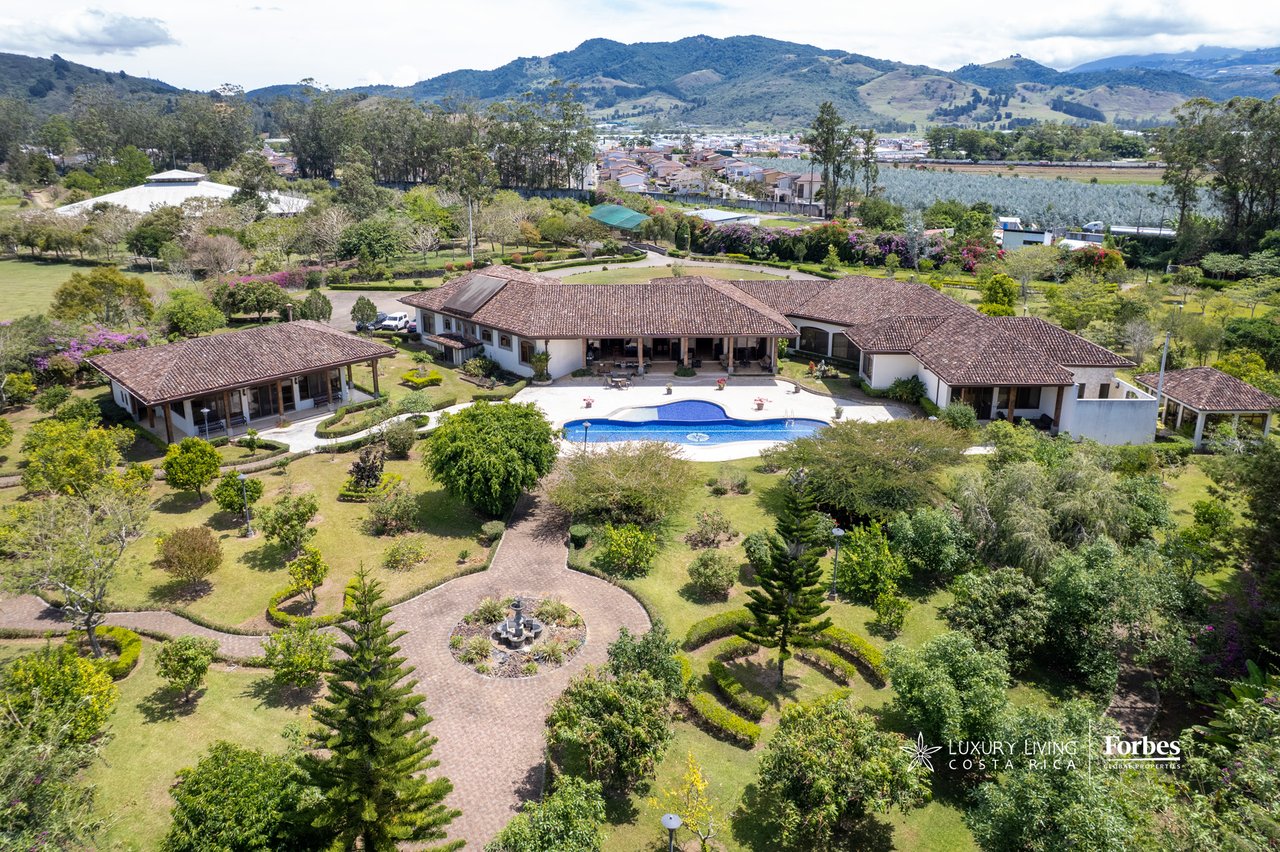
The Four Days Cartago Spent Mapping Its Own Weekend
September 10, 2026
September 10, 2026
Photo credit: Hacienda Verdelli
Cartago rarely gets asked what it does on a Saturday. Outsiders know it as the province with the Basílica, the one everyone passes through on the way to Irazú or the Orosi Valley. So when a national broadcaster spent four consecutive days this past March building a route through the province, stop by stop, the sequence itself was worth noticing. Not because it revealed anything undiscovered, but because it confirmed what residents already do: they treat Cartago as a loop, not a landmark.
The series, run by Teletica under the title "La ruta turística definitiva de Cartago," moved from the historic center to a municipal museum most people drive past without a second look, then to a university research garden, then out to a valley of thermal pools. Read together, the four stops sit close enough to each other that the whole thing fits inside a single afternoon. That proximity is the actual story here, and it says more about how this part of the Central Valley functions day to day than any list of attractions could.
The second stop in the series was the Museo Municipal de Cartago, and it's the one most likely to surprise a longtime resident. The museum operates inside the old Comandancia de Cartago, a building constructed during the administration of President Ricardo Jiménez between 1910 and 1914 and designed by the Spanish architect Luis Llach. That timing matters: Cartago had been Costa Rica's capital for roughly 300 years before the 1910 earthquake leveled much of the city and pushed the seat of government to San José. The Comandancia went up in the rebuilding years that followed, which makes the building itself a physical record of the moment the province's role changed.
Inside, the collection covers the social, artistic, and architectural memory of the province, and the museum functions as a teaching space for students and researchers as much as a public exhibit. Entry is free, and it's open Tuesday through Sunday from 9 a.m. to 4 p.m. For a city that's often reduced to a single pilgrimage site in outside coverage, a free municipal museum documenting its own reconstruction is the kind of detail that only shows up when you look at what locals actually built for themselves, not what tourism guides repeat.
The third stop, the Jardín Botánico Lankester in Dulce Nombre de Paraíso, sits about four kilometers east of Cartago city, close enough that some coverage puts it at just ten minutes from the city center. It's administered by the University of Costa Rica, and it functions less like a public park and more like a working research station that happens to be open to visitors.
The garden holds more than 3,000 plant species, and its orchid collection alone runs to roughly 15,000 specimens, one of the largest assemblies of orchids in Latin America. Beyond the orchid houses, the grounds include:
The garden hosted its 51st National Orchid Exposition this past March, drawing close to 1,000 specimens from eight orchid associations around the country, a scale that underlines how much of the national orchid community treats Lankester as its home base rather than just a display case. It's open every day of the year, including holidays, from 8:30 a.m. to 4:30 p.m. Entry this year runs 3,000 colones for resident adults and 2,000 for students and seniors, and the garden allows pets and outside food, a small detail that separates it from a formal tourist attraction and puts it closer to how residents actually use it: a place to bring the dog and a thermos on an ordinary Sunday.
The series closed at Hacienda Orosi, in Río Macho within the Orosi Valley, roughly 38 kilometers southeast of San José and, by other local measurements, about 15 kilometers south of Cartago city itself. This is the one stop built entirely around unhurried time. Seven thermal mineral pools range between 34°C and 39°C, set against views of Cerro Barba de Viejo and the Irazú and Turrialba volcanoes. Beyond the pools, the property runs a coffee tour through the surrounding hills with sculptures placed along the trail, and a small farm where visitors can walk among cattle, horses, and peacocks. It's open daily from 9 a.m. to 9 p.m.
What makes Hacienda Orosi different from a resort spa is the audience it's built for. The pace, the farm, the coffee walk, all of it reads as a place designed for a family that already lives twenty minutes away and wants an afternoon out, not a destination requiring a full vacation day.
Stop | Distance from Cartago city | Hours | One detail worth knowing |
|---|---|---|---|
Historic center | In town | — | Basílica |
Museo Municipal de Cartago | In town, Distrito Oriental | Tue–Sun, 9 a.m.–4 p.m. | Free entry |
Jardín Botánico Lankester | About 4 km east | Daily, 8:30 a.m.–4:30 p.m. | Roughly 15,000 orchid specimens |
Hacienda Orosi | About 15 km south | Daily, 9 a.m.–9 p.m. | Seven pools, 34°C–39°C |
Stacked this way, the circuit isn't a multi-day tourism package. It's a route a resident could run between breakfast and dinner, which is exactly how the province seems to treat it.
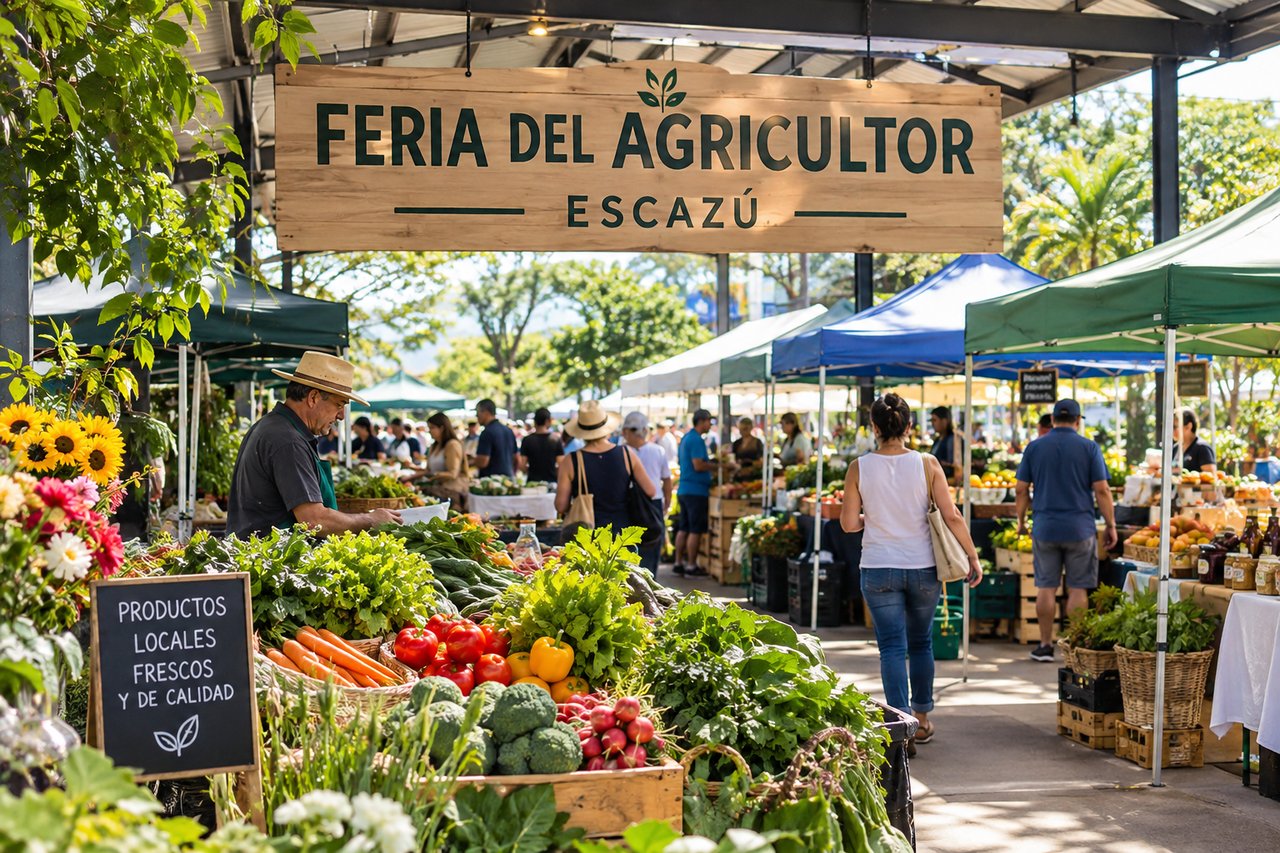
None of this happens in isolation from the province's working economy, and the clearest evidence of that is the Feria del Agricultor in Tres Ríos, in the canton of La Unión. The market runs Saturdays from 5 a.m. to 12:30 p.m., set up near the public library and the Correos de Costa Rica branch downtown. It's not a curated food hall. It's the same municipal farmers' market structure that operates across Costa Rica under national feria regulations, and it runs on a schedule that occasionally bends to local logistics rather than tourist convenience. Last December, the market's organizing association had to shorten its hours for one Saturday, closing by 11 a.m. instead of the usual midday cutoff, after a municipal request to clear the grounds for other scheduled events that afternoon.
That kind of small disruption is easy to miss if you're visiting Cartago for a weekend. It's the sort of thing you only notice if you live close enough to plan your Saturday morning around it. The market is the rhythm that runs underneath the more occasional loop of museum, garden, and hot springs. One happens every week. The other happens when you decide to make a day of it.
Take the four stops together and a different picture of Cartago emerges than the one most outside coverage offers. It's not a single pilgrimage site with a volcano attached. It's a province where the historic center, a free municipal museum, a university research garden, and a working thermal valley sit close enough to each other that residents move between them without much planning. The weekly farmers market adds another destination beyond the four-stop route. That kind of density, four distinct destinations within a short drive of each other, is unusual even by Central Valley standards, and it's the sort of texture that only becomes visible once you've lived here long enough to stop noticing the Basílica and start noticing everything around it.
For anyone who already calls Central Valley East home, that's the version of Cartago worth paying attention to this season: not a checklist, but a loop you can run whenever the weekend calls for it.
If you're already living in Central Valley East and thinking ahead to your next move here, whether that's upsizing, relocating within the province, or exploring what a property near this circuit might be worth, Luxury Living Costa Rica is a good place to start that conversation. Get Started Now.
Stay up to date on the latest real estate trends.


Jaco Beach Costa Rica - A beach community lifestyle
Invest in a lifestyle that values community, nature, and authentic Costa Rican culture. Contact us today to get started!
LUXURY LIVING COSTA RICA
PLAZA TEMPO ESCAZÚ SAN JOSÉ SAN RAFAEL COSTA RICA 10903