Escazú and Santa Ana Weekend Farmers Markets and Ferias
September 24, 2026
September 24, 2026
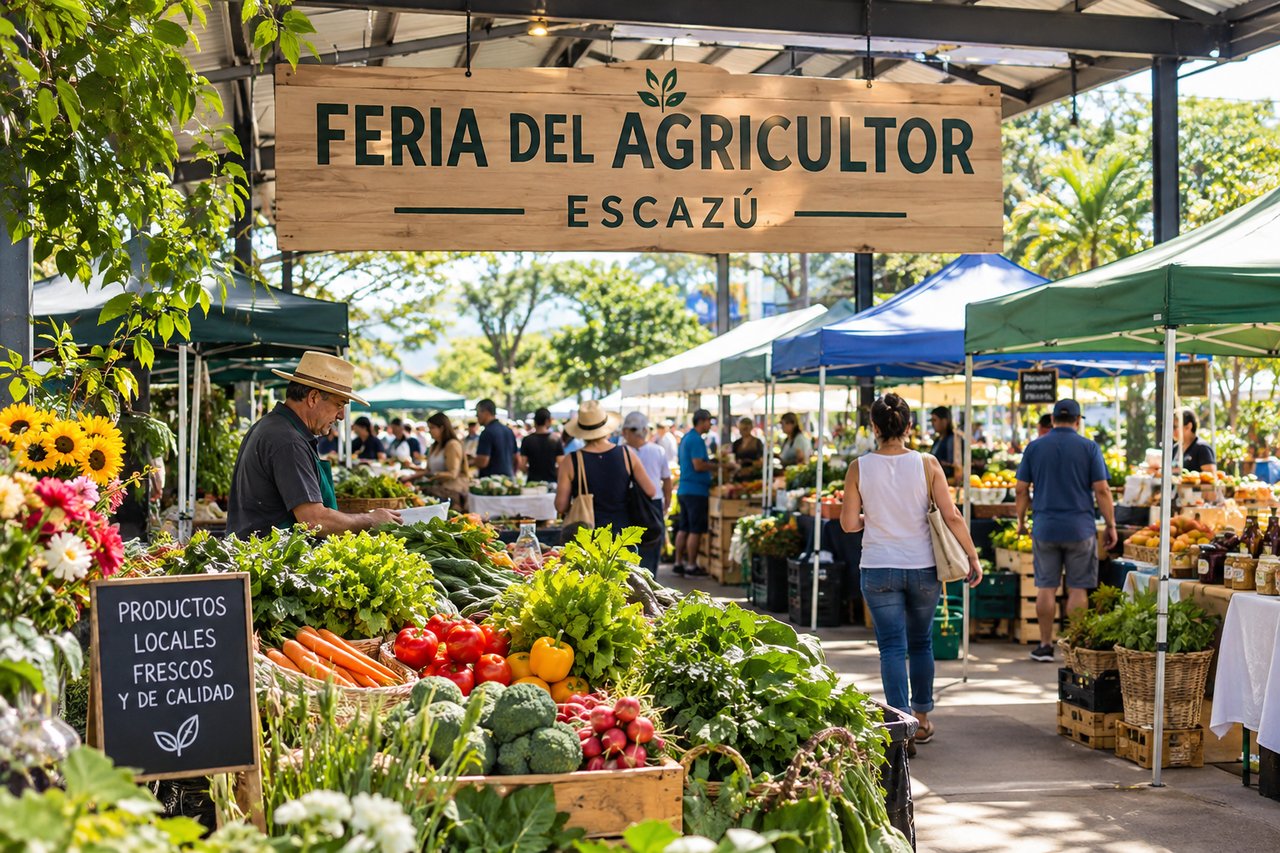
Before five in the morning, Avenida 32 in downtown Escazú is already working. Don Pupo's coffee stand has its urns going, the pupusa griddle is hot, and the produce tables are filling in under string lights that haven't been switched off yet from the night before. By ten the crowd is thick enough that finding parking within two blocks stops being realistic. By one in the afternoon, the tables come down, the trucks pull out, and Avenida 32 goes back to being an ordinary street until the following Saturday.
Twenty-four hours later, a version of the same scene sets up on Avenida 1 in Santa Ana. Some of the vendors are the same faces, a day older, prices nudged up slightly from what they charged the day before. It isn't a coincidence that Escazú claimed Saturday and Santa Ana claimed Sunday. It's the reason residents of either town never actually have to choose between them.
Escazú's Feria del Agricultor runs Saturdays from roughly five in the morning to one in the afternoon along Avenida 32 in the town center. Santa Ana's takes over Avenida 1 on Sundays, running from about five until noon. Both are searchable in Waze and Uber simply as "Feria del Agricultor," which is how most residents actually navigate to them rather than by street address.
The overlap in vendors is well known among regulars, who describe the Santa Ana feria as carrying some of the same stalls as Escazú's, just a day later and running slightly higher on price. Cash is still the default currency at both, though a handful of stalls in Santa Ana were among the first in the country to start accepting cards. Neither market schedules against the other. Miss Saturday because of a work trip or a full weekend, and Sunday is still there, one town over, with a familiar coffee vendor and the same trout guy who shows up wherever the crowd is.
That offset is what turns two separate town institutions into one working system. A resident doesn't pick a feria the way they'd pick a favorite restaurant. They pick a day.
For anyone who wants the same rhythm without the traditional produce-market crowd, Feria Verde de Aranjuez runs Saturday mornings from seven to twelve-thirty at the Polideportivo in Barrio Aranjuez, closer to San José proper but still a short drive from Santa Ana. It carries the organic and artisanal end of the same idea: pastured eggs, cured cheese, smoked trout, fresh bread, live music starting around midmorning.
The market also runs a smaller weekday version out of the old municipal market in Ciudad Colón, giving anyone who missed both weekend markets a third chance to restock without waiting a full week. It's a detail most newcomers never find on their own, since it doesn't show up on the same weekend calendar as the other two.
Until recently, the morning market was effectively the neighborhood's entire weekend identity. What happened after the produce tables came down was less defined: dinner somewhere familiar, maybe a drive up into the hills for a view.
That's changed on the exact two days the markets already claimed. Avenida Escazú, the mixed-use project anchored by the Marriott Residence Inn next to CIMA Hospital, now runs a seasonal format built around live music on Saturdays from four to five in the afternoon and DJ sets on Sundays starting at three, with an artisan pop-up market of food, jewelry, and design spilling between the buildings. The avenue's own project leadership has described the concept as inspired by an Italian countryside evening, built to give the space an identity beyond the retail and office tenants that fill it on weekdays.
The timing matters more than the theme. Morning belongs to produce. Afternoon and evening, on the same Saturday and the same Sunday, now belong to the avenue. For the first time, the neighborhood's weekend has four fixed points instead of one, and none of them ask a resident to be in two places at once.
Day | Morning | Afternoon & Evening |
|---|---|---|
Saturday | Escazú's feria, Avenida 32, roughly 5 a.m. to 1 p.m. | Live music at Avenida Escazú, 4 to 5 p.m., plus the avenue's kitchens |
Sunday | Santa Ana's feria, Avenida 1, roughly 5 a.m. to noon | DJ sets at Avenida Escazú, starting at 3 p.m. |
The kitchens along that avenue changed meaningfully this year. Yard House opened at Avenida Escazú in March 2026, and it marks the chain's first restaurant outside the United States, run locally out of a space of roughly 902 square meters.
Fogo de Chão followed in July 2026, opening inside the Sheraton Escazú as the Brazilian steakhouse chain's first Costa Rica location, operated by a group that already runs more than eighty locations of international brands in the country. The format is the traditional rodizio table service, the kind of meal that used to mean a trip into San José or an evening at one of the hillside miradores that have long served that role, places like Ram Luna or Tiquicia, built for the view and the occasion rather than the everyday.
Across the highway at Plaza Tempo, Kololo Ramen opened with an investment of roughly two hundred thousand dollars, bringing Korean casual dining with gluten-free and vegetarian options to a plaza that residents mostly use for weekday errands rather than weekend outings. The two properties sit close enough to see from one another, separated by a frontage road that runs alongside the tolled Autopista Próspero Fernández. It's a short distance on a map and enough of a physical break that most residents still treat crossing it as its own errand rather than an extension of the same walk.
None of these three openings required a special occasion to justify the drive. That's the shift worth noticing. A table for eight, a celebratory dinner for out-of-town family, a quick weeknight bowl of ramen: all three used to mean leaving the neighborhood or saving them for somewhere with a view. Now they're available on the same streets where the coffee stands set up before dawn.
None of the pieces here are new by themselves. The feria in Escazú and the one in Santa Ana have run on their respective days for years. What changed is the second half of the day. Where the morning circuit has always had a rhythm, the afternoon and evening spent most of the last decade without one, which is part of why so many residents ended up driving to San José or up into the hills once the produce was packed away.
That gap is what closed this year. The same two days that already belonged to the markets now carry a second identity after the tables come down, and three kitchens that didn't exist a year ago are the reason that second identity has something to eat.
Residents don't need a reason to notice any of this. It's just what the weekend looks like now, one town handing off to the other every seven days, morning and evening both.
If the day ever comes when this rhythm turns into a longer-term decision, whether that's finding a home closer to Avenida 32 or one within an easy Sunday drive of Santa Ana's market, Luxury Living Costa Rica has spent more than three decades helping people build a life in this part of the Central Valley, not just find a house in it.
Stay up to date on the latest real estate trends.
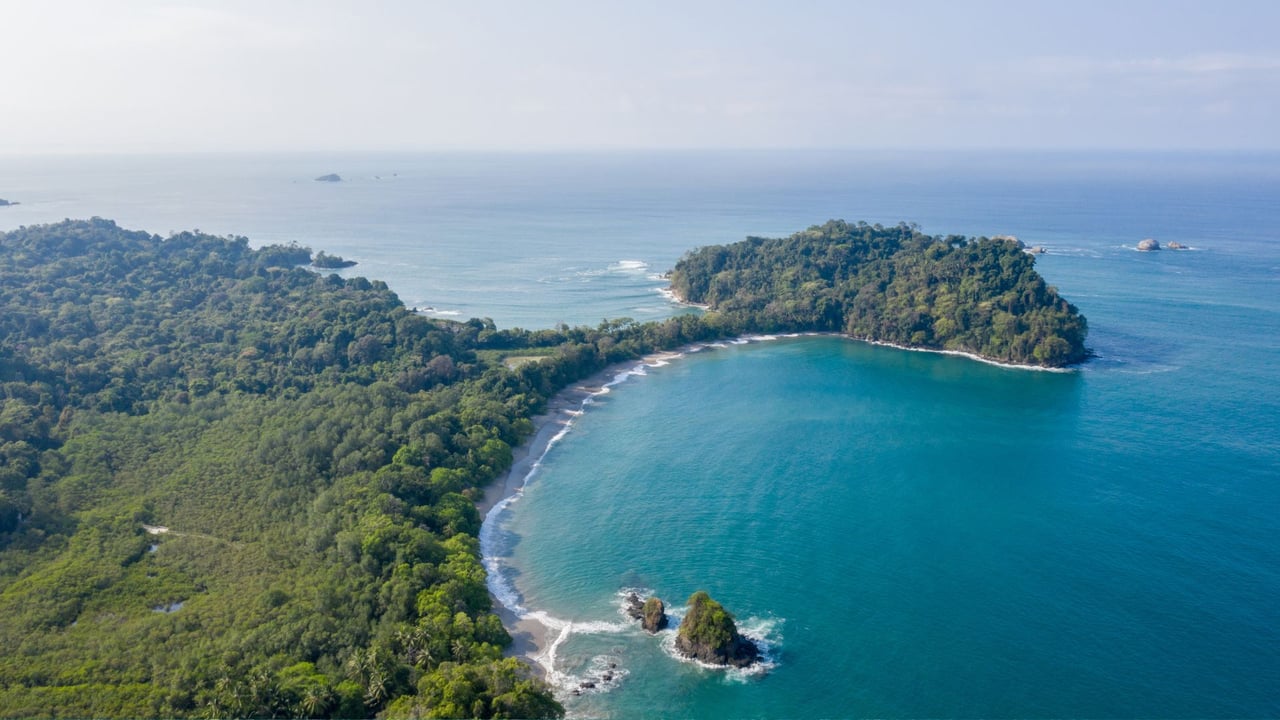


Jaco Beach Costa Rica - A beach community lifestyle
Invest in a lifestyle that values community, nature, and authentic Costa Rican culture. Contact us today to get started!
LUXURY LIVING COSTA RICA
PLAZA TEMPO ESCAZÚ SAN JOSÉ SAN RAFAEL COSTA RICA 10903